Back
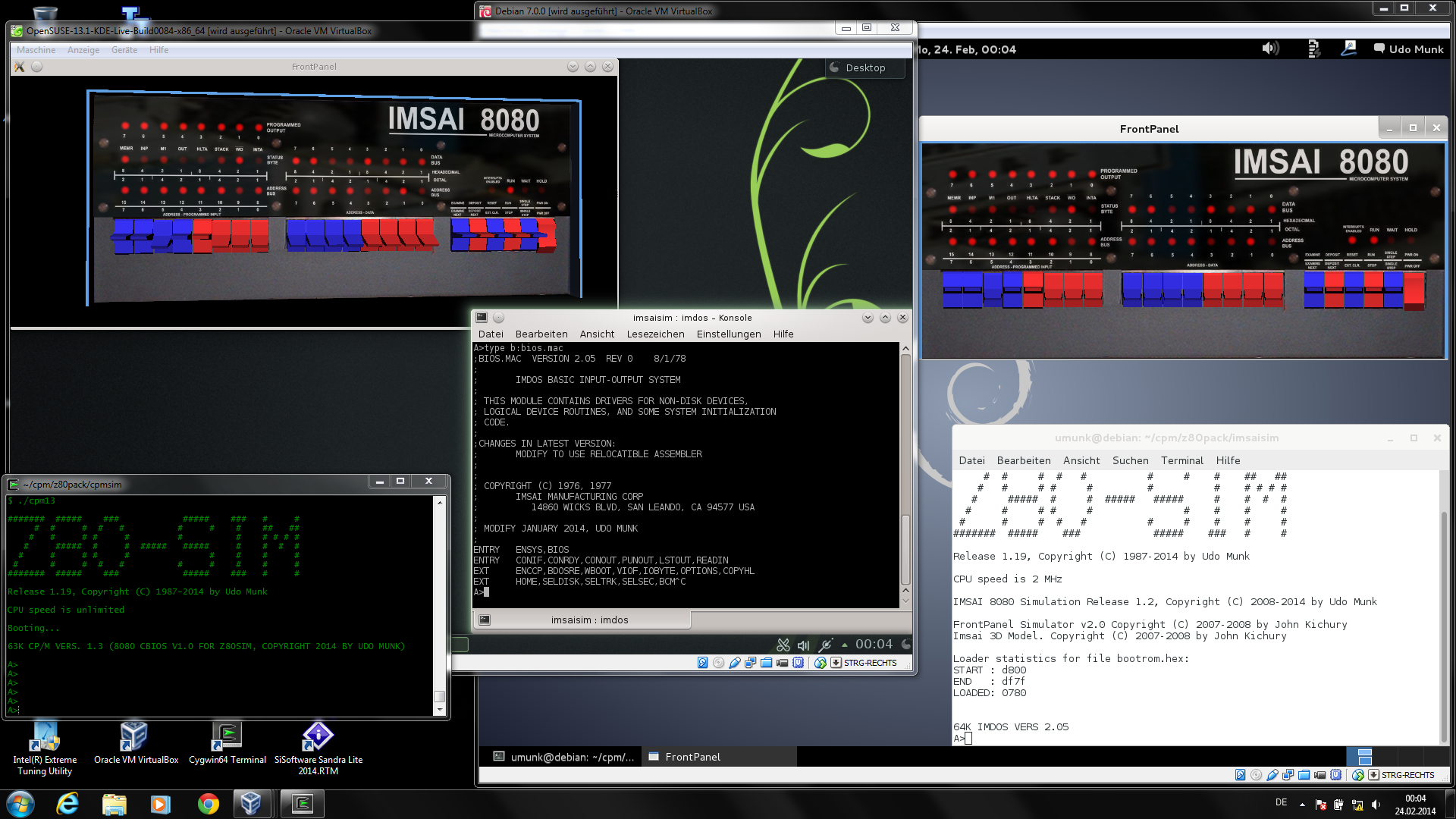
This is how my Desktop looks like 2014, when working on z80pack. The physical
maschine in this case is running Windows 7. On the right you see an Oracle
Virtualbox running Debian Linux 7.0.0 with the IMSAI machine 2D front panel
running IMDOS.
On the left you see an Oracle Virtualbox runnning OpenSuse Linux 13.1 with KDE
desktop with the IMSAI machine 3D front panel running IMDOS. I just made
the line printer working for the IMSAI machine. Same as cpmsim the
emulated IMSAI now can print into a file on the UNIX host.
Then on the left the green terminal is a Windows Cygwin terminal running
cpmsim just booted with CP/M 1.3.
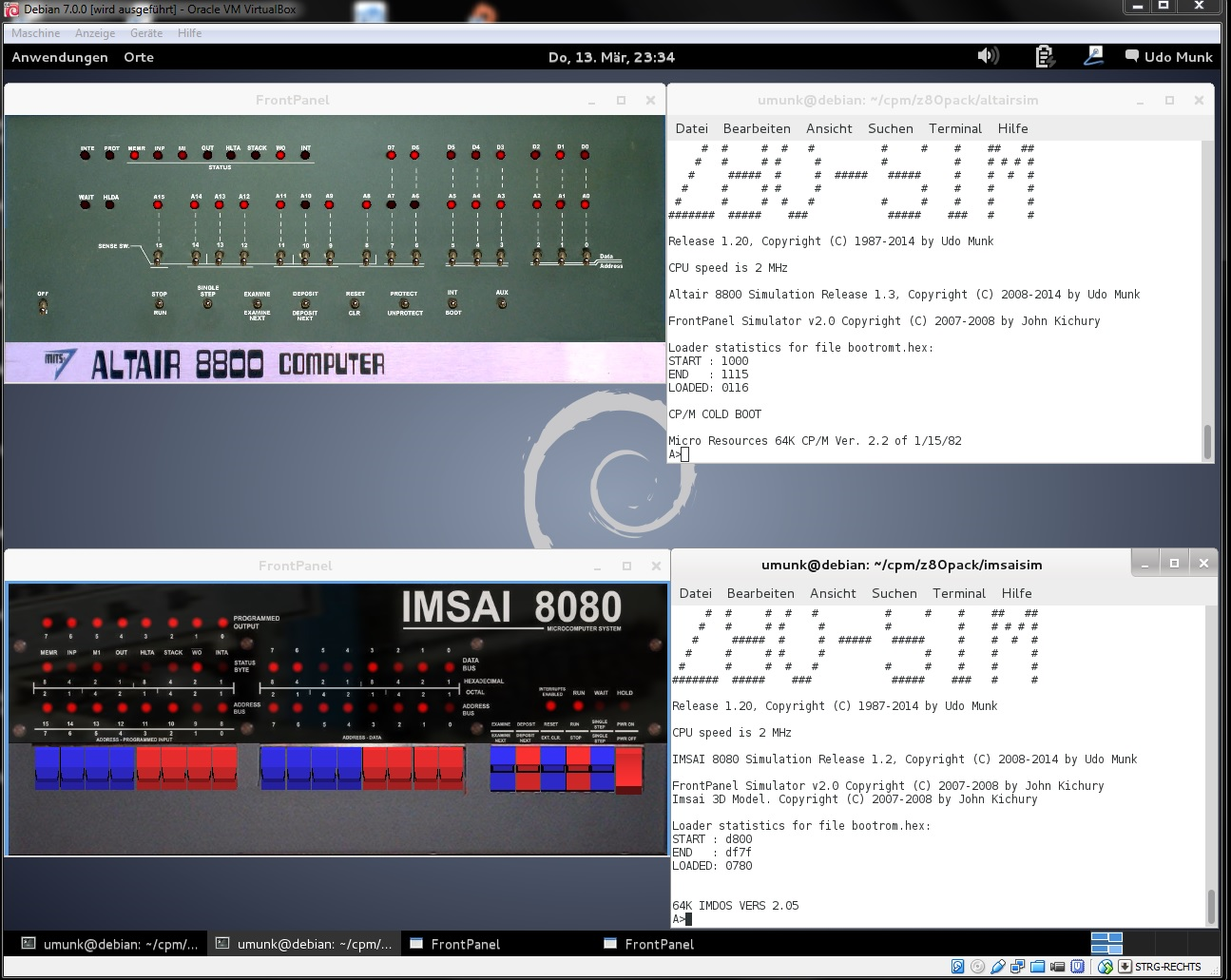
Here you see the first two complete computer systems, that could be owned
and operated by individuals at home, the Altair 8800 and the IMSAI 8080,
running CP/M.
Several tenthousand units of each were sold to individuals, who used them
to learn operating and programming such machines. And then many of them
went into the IT business, to build the most advanced machines and software
we now have in the 21th century. I have been part of that since 1974, when
I got access to digital computer systems, 4 decades by now.
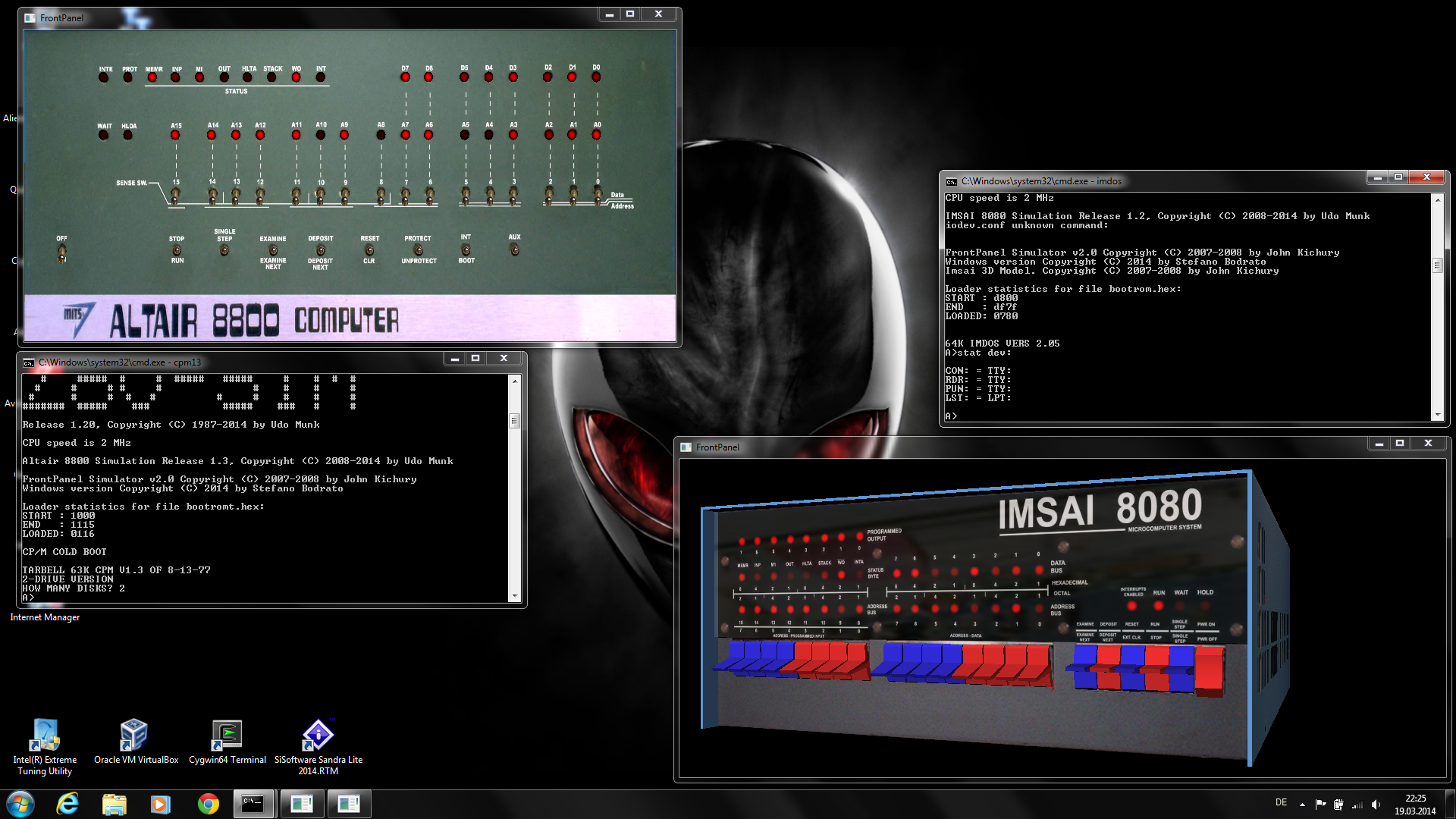
The front panel machines running native on a Windows 7 system, for those
who want to stick with Windows. An archive with ready to run binaries, scripts
and disk images with CP/M versions for the maschines is available in the
download section.
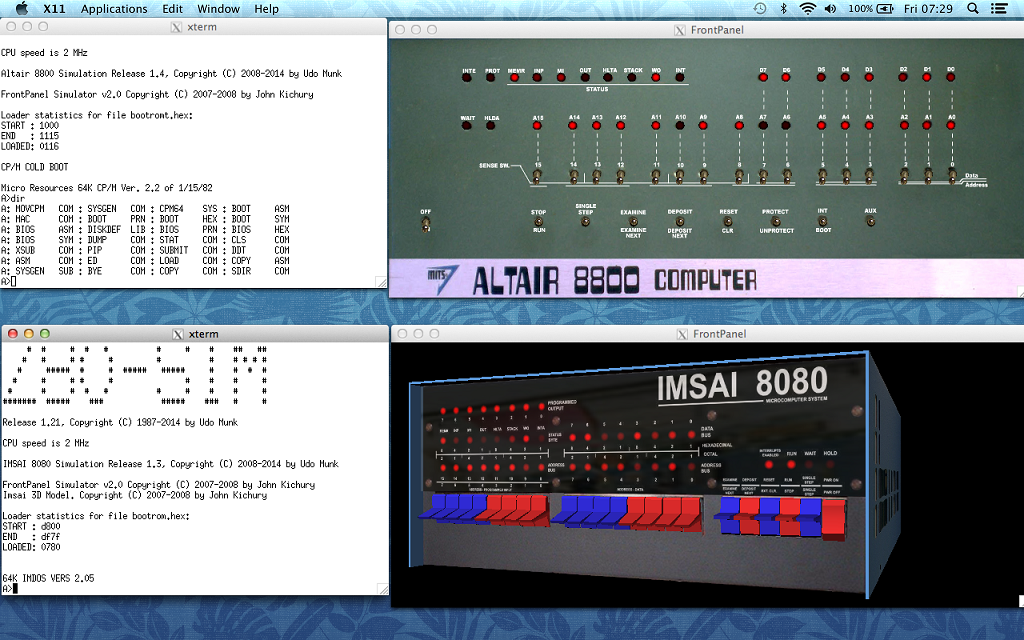
Just build under Apple OS X, works well and looks great on a Retina LCD.

Altair 8800 running with a vintage
Cathode terminal emulation

Here is a much better one together with
Cathode terminal emulation.
The terminal emulation has many settings and I needed a while to figure out
a good font and size for an appropriate x:y ratio, so that the terminal
really looks like a cathode tube screen.
On the terminal I opened the CP/M 2.2 BIOS assembler source for the Altair
with WordMaster editor, everything fully working of course.
The desktop picture came with the Apple system and I think, this one is a
good setting for the ancient machines, I really like this picture a lot.
PS: In the beginning DRI was named Intergalactic Digital Research, and MITS,
the company that developed the Altair machine, build model rocket kits before.
So here you have it, intergalactical ;-)

The Altair together with Egan Ford's greenbar teletype emulation. This
is a realistic teletype emulation with ca. 10 cps transmission speed and
sound support. One can't use a visual editor with a slow teletype, so
here CP/M ed is used, that is the hardware we had way back then. And now
go learn ed and use this stuff to write some software, then you really know
how that was 40 years ago.

The IMSAI machine running BASIC with a teletype.
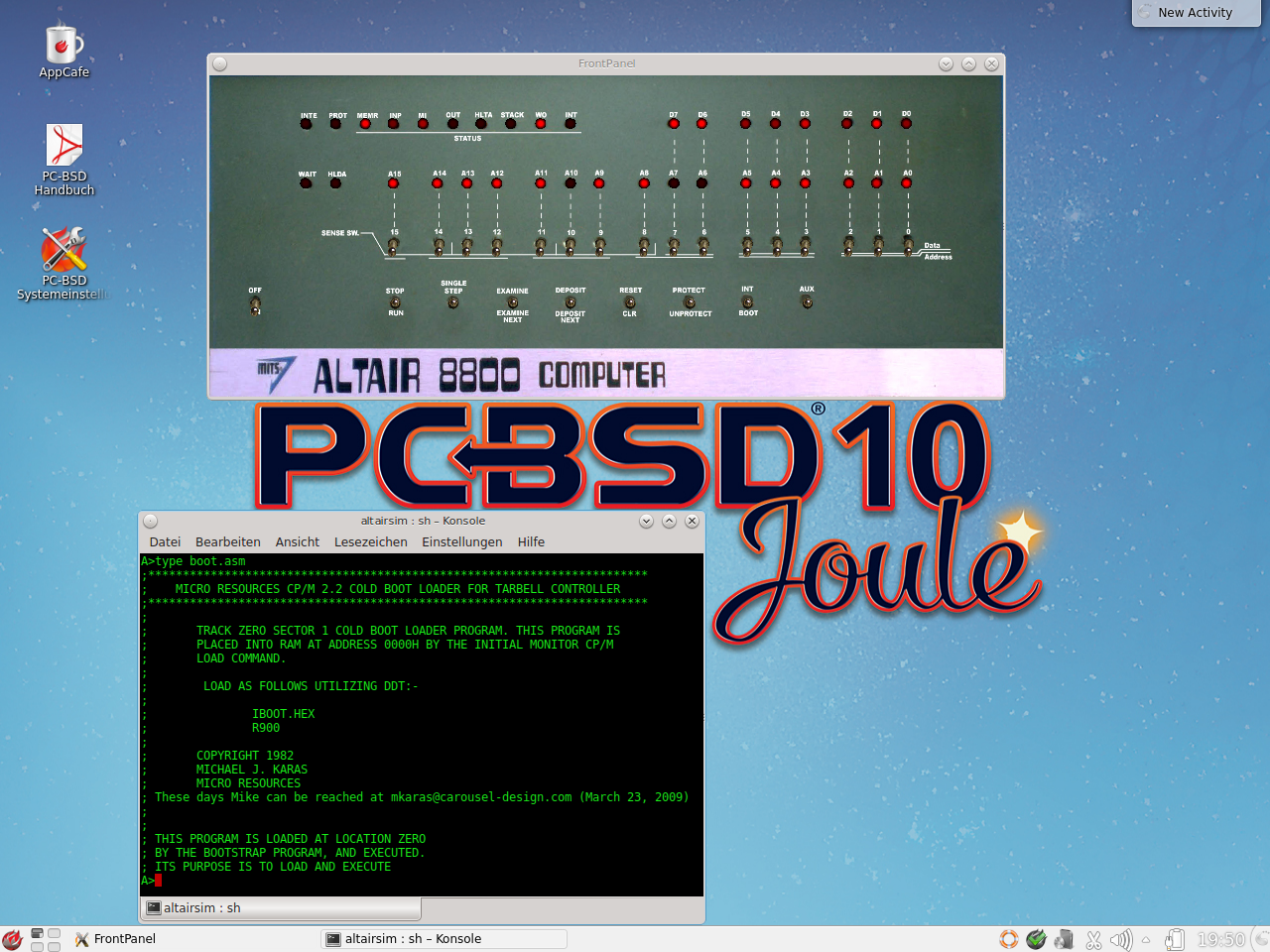
Works too.
Back