Back to Burroughs OverviewBurroughs C3317 Calculator
Electronics
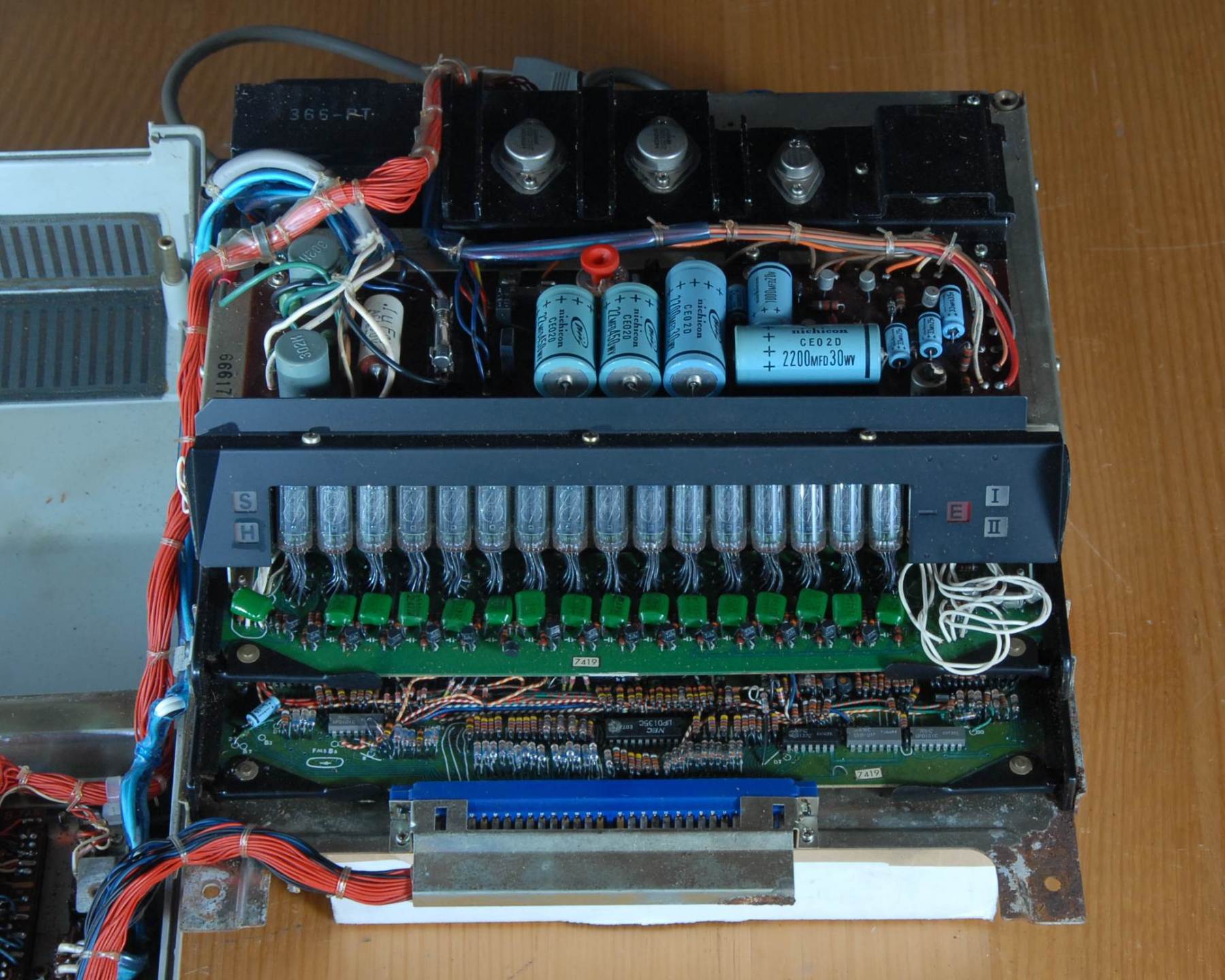
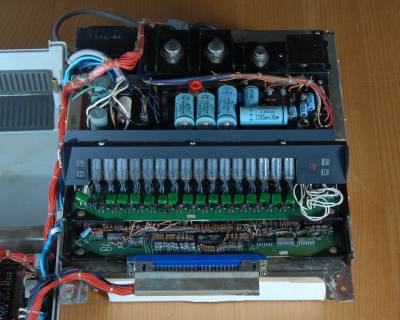
The C3317 is a clear successor to the C3300 and its construction is very similar. It benefits from Japanese advances in microelectronics by using mostly SSI and MSI ICs (NEC uPD-series) and only a minority of discrete diode and transistor logic. This also allows the electronics to be placed on just 2 PCBs, despite the C3317 being very much more capable than the the C3300.
Architecture, Memory & Speed
16 displayed digits, internal word size to be determined
Digit encoding and internal data path structure to be determined
Core memory, 18 x 28 matrix (? - seems small for programmability)
?? kHz master clock, ?? mS core cycle, ?? mS full-number time
Construction
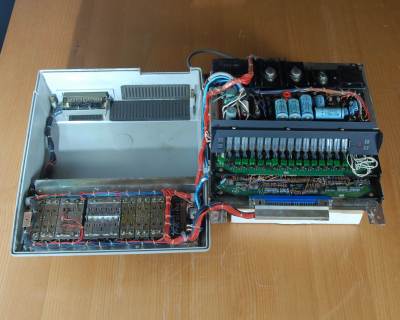
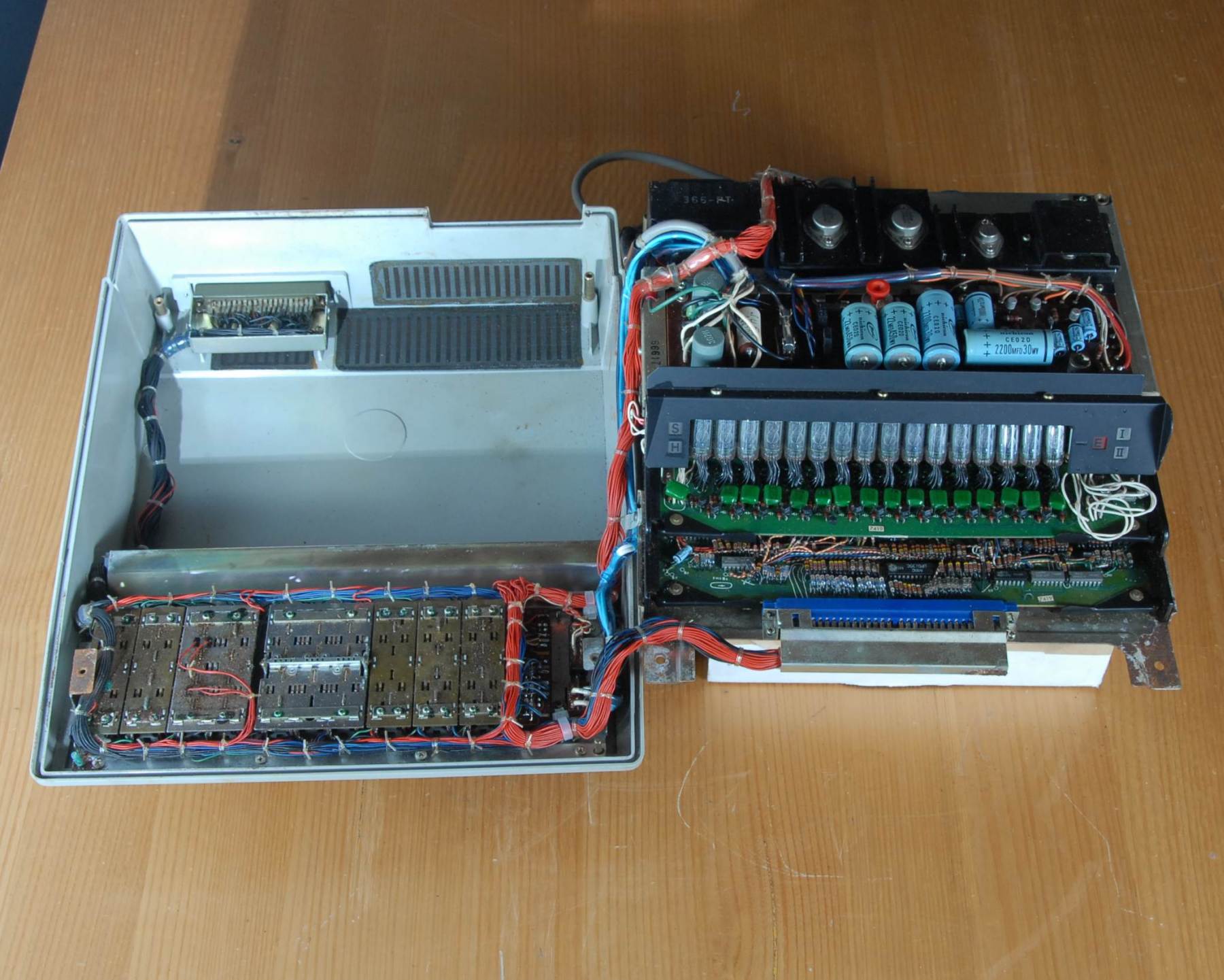
Physical construction is in keeping with first-generation machines. There is an intricate steel chassis with careful dressing of the many point to point connections and screw-down retainers for the edge connectors.
The keyboard uses magnets and reed switches in an elaborately engineered array.
Two dissimilar sized double-sided PCBs hold all of the electronics, these no longer have metal frames but each board does have extraction/insertion levers. Board layout is less anarchic than the C3300 but there are still many wire flying links and small thickets of closely packed end-on diodes.
IC's are by NEC, the uPD101C is known from the the NEC uPD MOS series but the others are unknown at this stage:
- uPD101C - Quad 2-input AND
- uPD133C - ??
- uPD134C - ??
- uPD135C - ??
- uPD136C - ??
Interestingly, there are some Hitachi HD9003's
There are also a series of unfamiliar modules marked simply as DP1, DP4 and DN3. These await further investigation.
The power supply is typical for the era, transformer based with series-pass regulation.
Burroughs C3317
Burroughs C3317
Burroughs C3317
Burroughs C3317